Dating Me Means Learning to Keep Me Alive: What Dating With Sickle Cell Looks Like

From late diagnoses to genetic compatibility, Ara Erinle discusses the reality of navigating relationships while managing a lifelong condition.

Dating is already complicated enough without having to wonder whether the person you love could genetically be the wrong match for your future. For many people living with sickle cell, relationships are not just about chemistry, attraction or having shared interests. Dating can also involve hospital visits, emergency protocols, conversations around genetic compatibility, and the realities of building a future while managing a lifelong condition.
Despite affecting approximately 18,500 people across the UK, according to the Sickle Cell Society, conversations around how the condition impacts dating and relationships often remain absent from wider discussions around modern dating.
To better understand what navigating dating with sickle cell can actually look like, The Scotch Bonnet Corner spoke with 25-year-old Ara Erinle about how having sickle cell has shaped her relationships.
What Is Sickle Cell?
The NHS describes sickle cell disease as a lifelong inherited blood disorder that causes red blood cells to become rigid and crescent-shaped, often leading to severe pain episodes, fatigue, anaemia and infections. The condition is most common in people of African and Caribbean descent.
Because sickle cell is inherited, a child can only have the condition if both parents carry the sickle cell trait, or if one parent has the condition and the other carries the trait. If both parents are carriers, there is a one in four chance their child will inherit sickle cell disease. A simple blood test can determine whether someone carries the sickle cell trait or has the condition itself.
The Conversation We Aren’t Having
For many, the first few months of dating are filled with questions about how many siblings you have or where you grew up. However, for those in the Black community, Erinle believes there is a much more vital question being left off the table: What is your trait status?
“I don’t think that Black people dating Black people ever think, what if we both have the sickle cell trait?” she says. “That’s basically what happened with my parents. No one else in their family had sickle cell. None of my siblings has sickle cell, but both my parents carry the trait.”
For Erinle, this reflects a wider lack of awareness surrounding sickle cell and genetic compatibility, despite the serious implications it can have for future families. NHS Blood and Transplant describes sickle cell as the UK’s fastest-growing inherited blood disorder, yet conversations around trait testing still often happen too late or not at all. While screening is offered during pregnancy and shortly after birth, knowing your trait status before entering serious relationships is rarely treated as a routine conversation.

Erinle is blunt about the stakes of this genetic gamble. She notes that sickle cell is entirely preventable because it can only be inherited when both parents carry the gene. While some couples choose to gamble once they find out they are both carriers, Erinle’s lived experience with the pain of the condition gives her a different perspective.
"So many people say, 'risk it for a biscuit,' but I feel like at the end of the day, if you understood sickle cell, that risk is just not worth it.”
A Hidden Diagnosis
The passion Erinle has for awareness stems from the fact that she spent the first 18 years of her life in the dark about her own health. Despite having the condition from birth, her parents kept the diagnosis hidden from her, a decision Erinle says was rooted in a desire not to limit her. She explains that “My mum's whole idea behind it was that if it's not affecting you, why burden you with the knowledge?”
“I was very shocked,” she says, recalling how she finally discovered the truth. “My mum didn't really know anything about sickle cell because the hospital had just told her, if you see swelling in their hands and feet, bring her back to us; if not, then you're good.” Erinle later discovered that much of the advice her mother had been given was inaccurate.
Erinle has the SC genotype, which often presents later in life than the more common SS type. As a result of being unaware that there was anything medically wrong with her, she managed to push herself through 16 years of ballet and became one of the fastest girls in her year at school, even while her body was quietly struggling.
The truth only came to light during her first year at the University of Nottingham. After passing out in a club during Freshers' Week, she was rushed to the hospital, where a doctor asked why she hadn't disclosed her sickle cell status. “I was like, what’s sickle cell? I didn’t know what sickle cell was,” she remembers. “That was a very defining moment in my life.”
Sickle Cell as a Filter For Bad Partners
Before her diagnosis, Erinle’s experience with dating followed a typical path, but the revelation at university shifted her perspective on what a partner needs to provide. She describes how the condition has actually made dating easier in one specific way: it acts as a high-standard filter for character.
“I would not say that sickle cell has made dating difficult; if anything, it has made it easier because I know the standard to which I need to be taken care of is higher,” she explains. For Erinle, the physical demands of the condition make it easy to spot “red flags” early on. She recalls a past relationship where her partner wanted to be “served” rather than provide service to her, often leaving her alone during hospital stays.
“I can’t afford to date someone that’s going to stress me out,” she says. “It’s made it a lot easier for me to see when people don’t care. When you go into hospital, and you don’t hear from someone, or there are no efforts to reach out, it makes things very black and white.”
When Support Becomes Life-Saving
Dating with sickle cell involves a level of vulnerability that goes beyond emotional intimacy; it is often a matter of physical safety. Erinle describes a good partner as someone who is not just a companion, but an advocate.
This advocacy is vital in a healthcare system where she feels patients can be taken advantage of if they are alone. “My partners and my friends do a very good job at advocating for me... asking, “Why is she not getting her medication on time? What's happening with the transfer process?”
She notes that a partner who does not understand the condition can quickly become a “liability.” Because a crisis can be fatal, they need to know which hospitals to go to, which medications are being used and how to spot the signs of a reaction to a blood transfusion. “If you don’t know their crisis protocol, you’re actually a liability,” Erinle warns. “Any crisis can kill anyone.”
The Standard of Love
Fortunately, Erinle has found that when a partner truly cares, the “burden” of sickle cell is shared rather than ignored. She met her current partner on Hinge, and while he had not heard of the condition initially, his response set a new bar for what support looks like. “By the second conversation we had, it was like he knew everything about sickle cell,” she says. “He just went out of his way to go and do the research and to learn.”
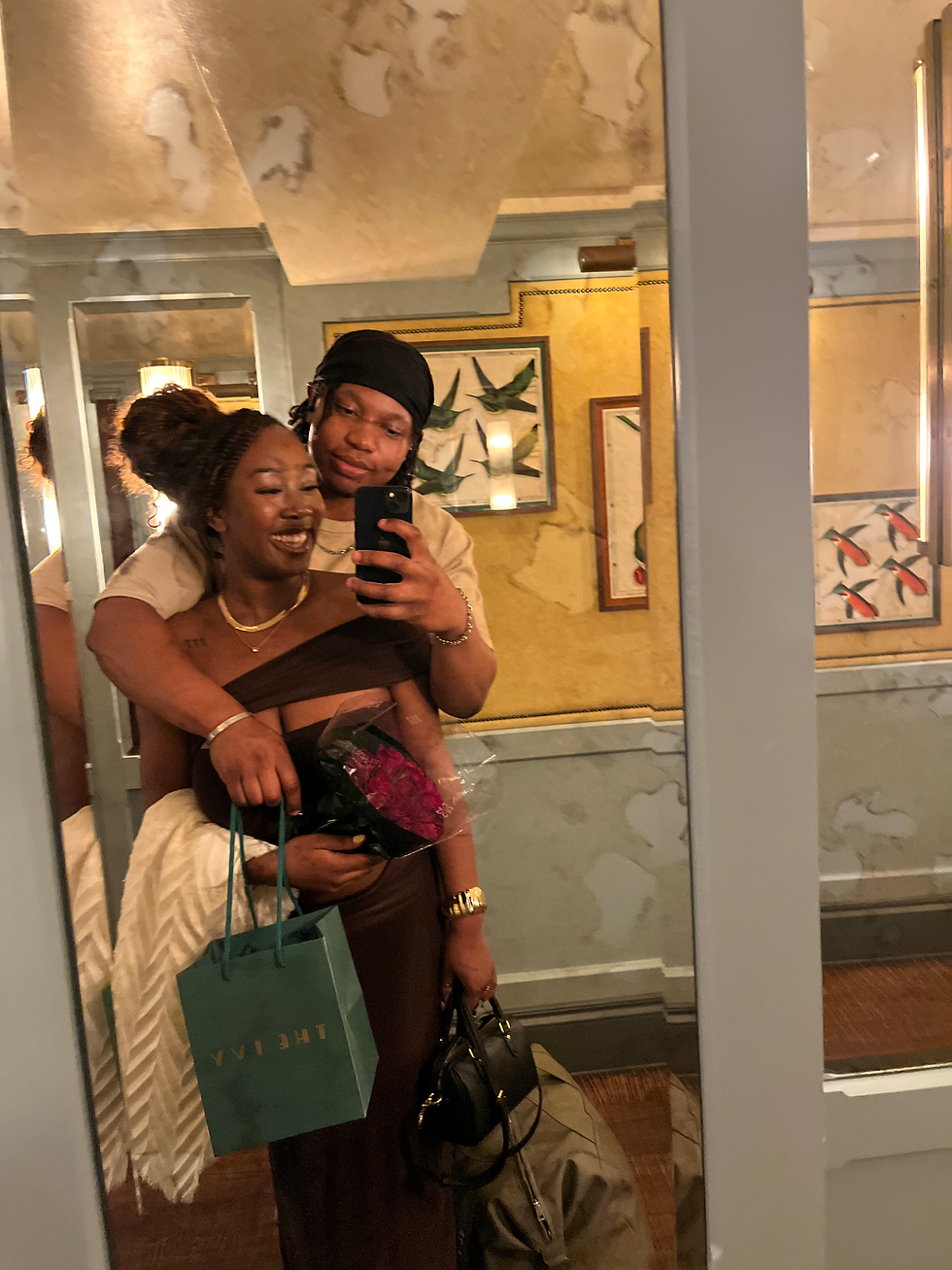
This proactive care has translated into practical action. Whether it is packing her hospital bags without being asked or staying by her side during a transfer to a specialist hospital hours away, his involvement has reinforced Erinle’s belief that the right person will see the condition as part of the package, not a deal-breaker.
“I feel as though you need to understand the risks that come with dating someone with sickle cell,” she says. “If you're someone with a big ego, I would not recommend dating someone with sickle cell because you're going to find yourself very frustrated.”
Redefining Worth
For many living with chronic illnesses, there is a lingering fear of being seen as “baggage.” Erinle admits it took her a long time to unlearn the idea that she should settle for less because of her medical needs.
She explains that seeing the experiences of other women with sickle cell around her also shaped the way she initially viewed relationships. “A lot of my friends with sickle cell, they do already have children, and are single parents, and their partners do not participate much at all in their children's lives, or go out of their way to make their lives easier.” This reinforced the idea that women with sickle cell should simply be grateful to be chosen at all.
“I've been in very abusive and toxic situations where I'm thinking, ‘well, I come with all of this baggage, so realistically, is this not what I deserve?’” she reflects.
Today, her outlook is rooted in self-respect and her faith, which has helped her realise that a relationship should only be a “plus” to an already whole life. “I think one thing I've come to realise is it's better to be single and healthy and happy and whole, than to be in a relationship where you are compromising yourself and your health,” she says.
Her advice to others navigating the dating scene with sickle cell is simple: don't accommodate disrespect to keep a relationship. “The level of respect that you receive is directly in alignment with your demands,” she says. “Treat yourself like your own best friend.”
Showing Up Properly
Ultimately, Erinle’s experience shows that in relationships shaped by chronic illness, love is not just measured through words or gestures, but through who is willing to stay, understand and show up when things become difficult.
“People that care go and do the research,” she says.

Comments